In November, people across the United States participate in Election Day. The U.S. is a representative democracy, which means citizens vote to choose leaders who make decisions and laws for them.
The Three Branches of the U.S. Government
To understand elections, it helps to know how the government is structured or organized. The U.S. government has three separate parts (called branches) so that no single person or group has too much power:
Executive Branch (The President & Vice President)
Leads the nation, commands the military, and enforces national laws.
Legislative Branch (Congress)
Makes national laws and decides how the government spends money.
Congress is divided into two parts:
- The Senate
- Has 100 total members (2 Senators per state, no matter how big or small the state is). Senators serve 6-year terms.
- The House of Representatives
- Has 435 total members. States with larger populations have more Representatives. Representatives serve 2-year terms.
Judicial Branch (The Supreme Court & Federal Judges)
Explains laws and decides if they follow the U.S. Constitution.
Federal judges are appointed by the President and approved by the Senate.
They are not elected by voters.
Political Parties and Campaigns
Before an election happens, candidates work to convince people to vote for them:
Political Parties
Groups of citizens who share similar ideas about government.
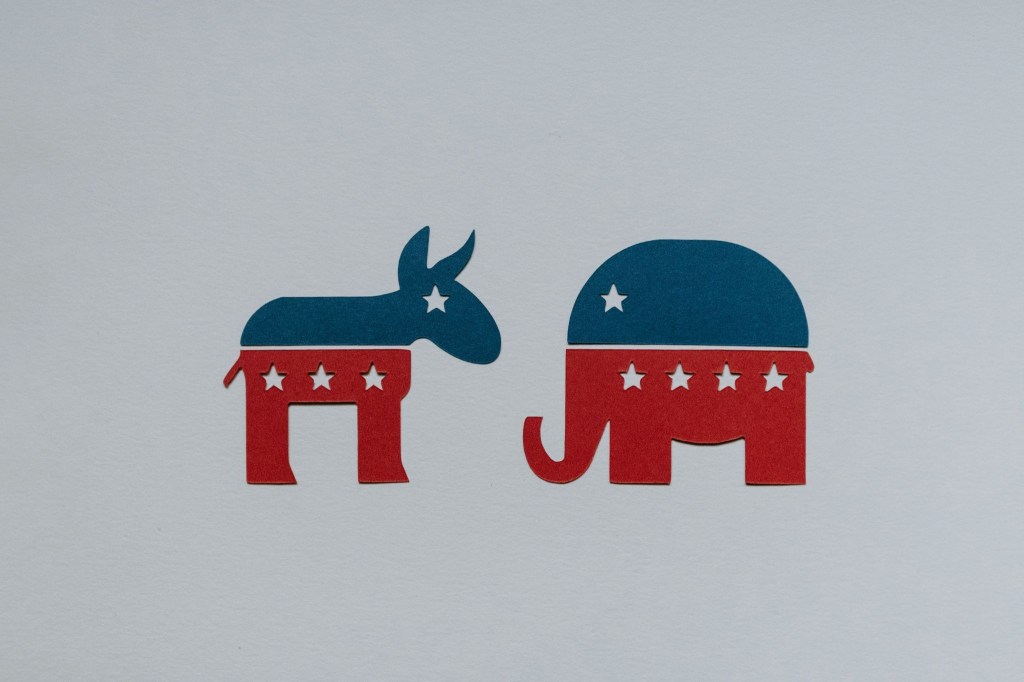
The two main political parties in the U.S. are the Democratic Party and the Republican Party.
The Campaign
Candidates travel, give speeches, put up signs, and debate on television to explain their goals to voters.
Primary Elections
Special elections held earlier in the year where party members choose one candidate to represent their party.
The General Election
The final nationwide election is held in November. Voters choose their leaders from the candidates representing different parties or running independently.
What Are People Voting For in November?
On Election Day, voters receive a paper or digital document called a ballot that lists choices for many offices at different levels of government:
Federal Elections (National Level)
The President and Vice President
- The top executive leader of the national government and second-in-command assistant.
- Elected as a team every 4 years.
- Lead the nation and help run the country, such as leading government departments, working with other countries, and commanding the military.
U.S. Senators
- Represent their whole state in Congress (6-year terms).
- Help with big national jobs, such as writing national laws, approving national judges, and voting on treaties with other countries.
U.S. Representatives
- Represent a smaller local district in their state (2-year terms).
- Help with national lawmaking, such as writing tax rules and deciding how the national government spends money.
State and Local Elections (Community Level)
- The state government handles rules and services inside your state.
- Local elections affect daily life in your city or town most directly.
Governor
- The top leader of a state (similar to a president, but for one state).
- Leads state departments and manages state programs, including signing or turning down state laws and planning the state budget.
State Legislators
- State Senators and Representatives who write laws in the state capital (similar to how Congress works at the national level).
- Decide on many state issues, such as writing state laws, voting on state taxes, and choosing funding for local schools, state highways, healthcare, and state parks.
Local Officials
- Mayors, City Council members, school board members, and other local leaders.
- Take care of town and city services, such as city budgets, public schools, local police, fire departments, buses, trash pickup, and parks.
Ballot Questions (Measures & Propositions)
- In addition to choosing leaders, voters often see direct questions on their ballot.
- Voters mark “Yes” or “No” to decide on proposed state or local laws (for example, raising local sales tax to repair public bridges, or changing state laws on housing).
How Electing a President is Different From Other Elections
In the U.S., choosing a President is different from choosing any other leader. Most elections use direct voting, but the presidential election uses a state-by-state point system.
Most Elections: The Popular Vote
For Governors, Senators, Representatives, Mayors, and local leaders, the rule is simple: direct popular vote.
- Every citizen casts a direct vote for a candidate.
- Workers count all individual votes.
- The candidate with the most total votes wins.
Presidential Elections: The Electoral College
The President is not chosen by the total national vote count. Instead, the U.S. uses a system called the Electoral College.
State Points
Each state gets a set number of points called electoral votes based on its population. Large states (like Texas or California) get more points; small states (like Vermont or Wyoming) get fewer points. There are 538 total points across the country.
Winner-Takes-All
In almost all states, whichever candidate gets the most votes inside that state wins all of that state’s electoral points. The other candidates get zero points from that state.
How to Win
To become President, a candidate must win at least 270 electoral points nationwide.
Why This Matters
When citizens vote for President, their votes tell their state which candidate should receive the state’s points.
When using this system, a candidate can sometimes win the total national popular vote count but still lose the election if the other candidate reaches 270 electoral points first.
Who Can Vote and How Elections Work
Who can vote in a U.S. election?
To vote in a federal election, a person must meet four basic rules:
- Be a U.S. citizen (by birth or naturalization).
- Be at least 18 years old on or before Election Day.
- Live in the state where they vote and meet local residency rules.
- Be registered to vote before their state’s deadline.
Non-citizens, including green card holders and permanent residents, cannot vote in federal elections.
How do people cast their vote?
States give citizens a few different ways to cast their ballots:
In-Person Voting on Election Day
Voters go to their assigned local building called a polling place (such as a nearby school, library, or community center). They check in with election workers, go into a private booth, and mark their choices.
Early In-Person Voting
Many states open special voting centers days or weeks before Election Day so people can vote early if they are busy on Election Day.
Mail-In or Absentee Voting
Voters can request a ballot sent to their home, fill it out privately, sign the return envelope, and drop it off at a secure official location or mail it through the post office.
What happens inside the voting booth?
Secret Ballot
Voting in the United States is strictly private and secret. No election worker, employer, family member, or police officer can see who you voted for or force you to vote a certain way.
Assistance for Voters
Voters who need help with reading, filling out the ballot, or using adaptive equipment can bring an assistant or request help from official election workers at the polling place. Translation materials and ballots in multiple languages are often available in many communities.
Vocabulary Words
- Ballot: The official paper or digital screen used to mark choices in an election.
- Branches: The three separate parts of the U.S. government (Executive, Legislative, and Judicial).
- Campaign: The organized effort by candidates to travel, speak, and convince people to vote for them.
- Candidate: A person running for a political office.
- Citizen: A legally recognized member of a country.
- Direct Voting: A system where citizens cast their own individual votes for a candidate, and the person with the highest total vote count wins the election.
- Election Day: The official day when citizens vote for their government leaders.
- Electoral College: The point system based on state vote results used to choose the U.S. President.
- Electoral Vote: A point given to a state based on how many people live there. Candidates collect these points to win the presidency.
- Political Parties: Organized groups of citizens who share similar ideas about government (e.g., the Democratic Party and the Republican Party).
- Polling Place: The assigned local building where citizens go to cast their vote on Election Day.
- Popular Vote: The direct votes cast by individual citizens in an election.
- Registered: Officially signed up with state election authorities to vote.
- Representative Democracy: A system of government where citizens vote for leaders to make decisions and laws for them.
- Secret Ballot: A private voting process where no one can see who a person voted for.
- Term: The fixed length of time a leader serves in office.
Discussion Questions
- The U.S. government is divided into three different branches.
Why do you think power is split this way instead of giving all the power to one person? - What are the two main political parties in the United States?
Have you ever seen campaign signs or commercials for candidates in your community? - The text notes that local elections affect daily life in your city or town most directly.
Which local issue matters most to you and your family? - Have you ever seen a ballot question where voters vote “Yes” or “No” on a law?
What kind of laws do you think people should vote on directly? - How is choosing the President different from choosing a Mayor or Governor?
Does it surprise you that a candidate can win the popular vote but still lose the election?
Why or why not? - The text lists in-person voting on Election Day, early voting, and mail-in voting.
Which way of voting do you think is the easiest or most convenient? - Why is it important that voting in the United States is a secret ballot where no one else can see your choices?
More Easy English Resources
More Related Resources
Visit the Joyful Moments ESL homepage for all posts, or scroll through other blog posts about American Holidays and Traditions:
Election photos from Pexels.com and Unsplash.com.


Leave a Reply